
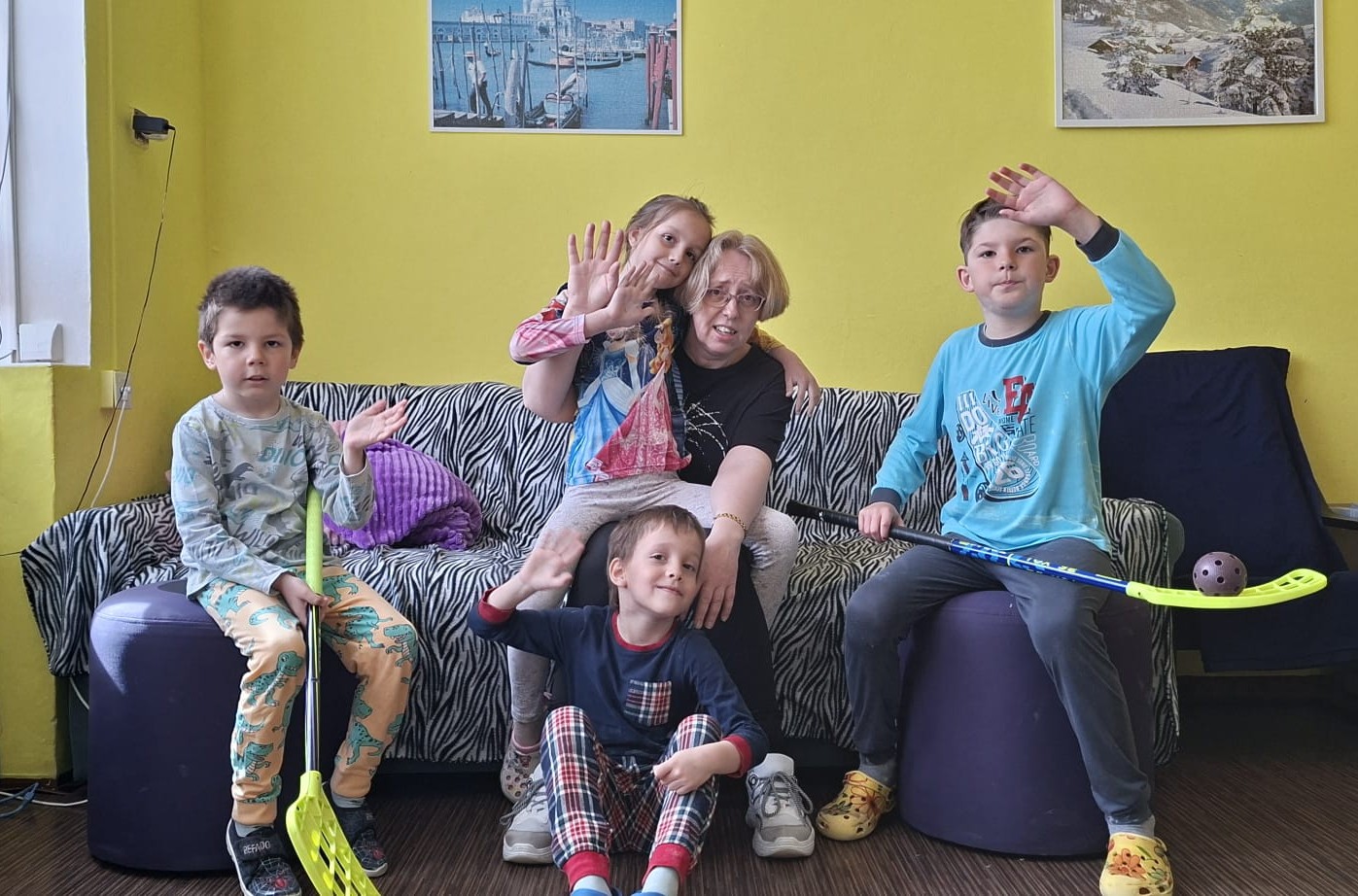
30 years ago, the Ledce Children’s Home became the 1st recipient of aid from Chance 4 Children. The following is an interview and a touching account of her service there by the current head educator at Ledce, Romana Imramovská.
Romana, you have been working in the children’s home for over 20 years. What originally brought you to this profession?
Since childhood, I have loved small children and enjoyed tutoring. I always knew I wanted to go either into traditional education or specifically into a children’s home. My dream came true in 2002 when I started as a teacher at the school that was part of the home back then. Gradually, however, I began to get to know the work of an educator and I stayed with it. For the last ten years, I have been leading the team of educators there.
What does your typical day look like? Is there any room for routine?
None at all. Every day is completely different. While I plan everything I need to do in the office in the morning, the phone rings, and those plans go out the window. I need to go to school for a sick child, accompany someone to the doctor, or handle meetings with institutions. It is a merry-go-round – one day is happy, another is sad or even depressing. Finding a “little gap for laughter” in all that hustle can be difficult, but when a child just comes to hug you and boasts about getting an ‘A’ at school, it is the best medicine.
Many people still have distorted ideas about children’s homes. What is the reality in Ledce today?
People often think we live here like it’s a military drill, huge bedrooms for twenty children, uniform clothing… The opposite is true. We are undergoing a major transformation. We have five family groups where 6 to 8 children of various ages live. The groups function like regular households – they have their own living rooms and kitchens, and they learn everything they will need in life: how to shop, cook, wash laundry, or clean up after themselves.
What is the hardest part of your work in the current system?
Paradoxically, the biggest challenge is the parents of our children and sometimes the state apparatus, which throws boulders under our feet instead of helping. Another problem is the funding of operations and the salary evaluation of educators so that their demanding work is truly appreciated.
You have been part of the Pomocník (Helpmate) program by C4C for three years now. What were your expectations when you joined?
I wanted to learn how to help the children even better with the “little hurts” they carry from their original families. Previously, there weren’t many training sessions tailored specifically to the needs of educators, which Pomocník changed. A great advantage is e-learning – I can study at my own pace, even in bed at night via my phone, and then connect with colleagues from other homes online to share experiences. In our home, this program is now mandatory for all newly arriving educators to help them get oriented more quickly.
Do you have a specific example where the program has truly helped?
Definitely. The practical tools, such as the “idea book” (nápadník) or planning calendars, are great. For one of our children, we managed to set a daily routine using a planning calendar where they marked for themselves what they had already completed and what they still needed to do. Pomocník also improved the atmosphere in the adult team – we realize more that each child is an individual with their own scars on the soul.
When you look into the future, what would you wish for “your” children when they leave the gates of the children’s home?
It is a difficult wish, but mainly I want them to be able to integrate into society without major problems. I want them to know they can come to us for advice anytime they feel lost, and I want them to remember us with joy.
Bio: Romana Imramovská
Romana Imramovská has been working at the Ledce Children’s Home for 24 years, starting her career there 6 years after C4C first began cooperating with the home. Her journey began in 2002 as a teacher in a school that was then part of the home. Gradually, she became familiar with the work of a regular educator and found her calling in this profession. For the last 10 years, she has served as the Head Educator. Working with children has been her dream since childhood, when she enjoyed tutoring and aspired to a career in education or specifically in a children’s home. Today, she is a key figure in the home, guiding both the children and her team.


